quarta-feira, 30 de maio de 2012

The Exposed Modern Body: The Terminator and Terminator 2 by J. P. Tellote

This is deep!
Terminator 2: Judgment Day  

Do not be misled by the above quote from Terminator 2 (1991). Hardly "deep," this chapter only looks at surfaces, particularly at how the Terminator films, as symptomatic of robot texts in more recent years, play with appearances. I cite this remark by young John Connor, according to these films the prospective savior of humankind, though, because it emphasizes a type of response at which both aim— what may even be a type of "saving" response that our most recent works about human artifice, even in their schizophrenia, may be working toward. This remark indicates not only the amazement any ten-year-old might well register at the "heavy" thought of one day sending his father-to-be back in time to sire him but also a kind of awakening, a shock of recognition at the depths of human nature, even in the face of postmodern culture's tendency to reduce everything, including the self, to surfaces, so that we everywhere seem, as the previous chapter offers, exposed, vulnerable, almost irrelevant.

We might recall Baudrillard's description of this situation as he sketches the impact our technology is having on the human body. He says that in the postmodern world—which he likens precisely to "science fiction"—we live in a state of "pure presence" or "overexposure," in that "obscene" condition we earlier defined (Ecstasy 17, 32). With "everything... so immediately transparent, visible, exposed" (21-22), the human body easily becomes little more than an object for a dispassionate gaze, an object with no hidden dimensions, no real desire, no purpose.1 As we have already seen, real science fiction—at least the science fiction film—has in the last decade taken a singular tack in exposing this pattern of expo¬sure. In a near fixation on the artificial, technologized body—the robot, cyborg, android—the genre has tried to examine our ambivalent feelings about technology, our growing anxieties about our own nature in an increasingly technological environment, and a kind of evolutionary fear that these artificial selves may presage our own disappearance or termination.

At the root of that fear, O. B. Hardison, Jr., feels, is a blurred or "weakening ... sense" (321) of what it means to be human, a loss of distinction or equating of all things that has become quite commonplace in the postmodern world. The Terminator films, along with similar robot movies of recent times, target this superficiality, which they expose by placing the artificial body, as a trope for the self, in front of the scene (as the word "obscene" implies), out in the open, where we might gauge its depths—and our own. In the way that this wave of films about a human artifice is trying to recuperate our "deep" sense, our sense of self, our very humanity, they suggest a significant pattern of resistance to that creeping postmodern overexposure.

As the focus for this chapter, I want to examine two of the most important recent movies about human artifice, the Terminator films. Both of these works describe a confrontation between humans and cyborg time-travelers from a future in which humans have nearly disappeared. As the films' titles imply, the goal of these creatures of artifice is to further that ongoing disappearance, in the first by killing the mother of the man who will lead the humans against a robotic hegemony, and in the second by killing the future leader himself while he is still just a boy. In posing such an ultimate threat to humanity, these figures of artifice point up the vulnerability of the human body, as they try to hasten its replacement by the very technology that is, in our own time, already replacing us in the factories, outstripping us in mental calculations, and generally making us feel exposed and insecure. But these films do more than just warn us about or measure the symptoms of our current "tremulous" state; they also signal a development, point a direction of possible response to that state. In that capacity, they are most fitting caps for this book's discussion of human artifice.


Both films treat the body in a similar manner. The manufactured bodies of the cyborgs they depict are not simply sites of special effects displays but measures of our own human level of "manufacture," our own constructedness. At the same time, the narratives emphasize the difficulty we have today in really seeing ourselves. In the postmodern environment Baudrillard describes as "visible, the all-too-visible, the more-visible-than-visible" (Ecstasy 22), we typically seem to lack the perspective needed to see things—or ourselves—clearly. Thanks to our cultural fascination with surfaces and superficial effects, we no longer seem able to focus beyond that which is constantly exposed for us. And this difficulty, Baudrillard suggests, often leaves us resembling the schizophrenic who "can no longer produce himself as a mirror" (27), and who thus floats free of any secure identity. The Terminator films, though, seem intent on reproducing this mirror, at finding ways to let us see the self through the image of the constructed body, while also revealing the very problem of seeing that plagues both our world and our films.

James Cameron's original The Terminator speaks to this world of superfice by contrasting two discourses on the body. Most obviously, the film presents the technologized body, the android Terminator, as a kind of ultimate threat, directed not just toward a specific individual but toward humanity itself. For if the Terminator can kill Sarah Connor, the eventual mother of the human leader, then all of humanity will be terminated and replaced by machines. In this way, and particularly in depicting the other, technologized body as menace, the film seems to replay an old and often-told story of modern society's "technophobia," (2) the fear that our constructions might eventually shape our destruction. It is a story picked up by a number of films that would try capitalizing on The Terminator's success, but most notably by Hardware
(1990)

At the same time, the film explores another sort of construction centered around the body, the manner in which it assumes a controlling cultural inscription, becomes almost in spite of itself a cultural construct. More specifically, it questions how notions of the feminine, the masculine, even the "normal" are imposed on us. (3) In linking these two discourses— the physically constructed body and the culturally inscribed self—the film ties the shaping, coloring power of technology to that of culture. It thereby suggests that these are not at all separate influences, but linked, mutual powers that wield a similar and indeed joint influence on us. In all of my subsequent references to a technologized self here, then, I want to evoke not only the "ecstatic" impact of technology that Baudrillard emphasizes but also a larger historical/cultural manipulation and inscription of the self, one in which our films have historically assisted.

Of course, the first film's title implies that its central concern is the technological threat, embodied in a killer cyborg which, for all of Arnold Schwarzenegger's excess muscularity, disconcertingly blends in with the human: speaks our language, crudely follows our basic customs, acts in roughly effective ways. (4) In fact, the film emphasizes just how easy it is to "pass" for human in a world that judges that status so superficially. As Sarah's human protector Reese explains, while the earlier model Terminators had crude rubber skin and were easily distinguished from humans, the newer model has become, at least to all appearances, almost undetectable. To dramatize the danger in that situation, a flashback shows a Terminator gaining entry to a human hideout and slaughtering the people there.

In a present that is surrounded by technology, where no one is primed to watch for such technological threats, and indeed where people seem to pay little attention to each other anyway, the Terminator has a far easier time passing. While he exits the time portal nude, he quickly finds suitable dress—a leather jacket and punk clothes that he appropriates from familiar types, three urban hoodlums. The clothes, his spiked hair, and a perfectly shaped body let him almost "stylishly" fit into the cultural landscape of 1980s America. Certainly, he hardly looks out of place in the Tech-Noir nightclub where he tracks Sarah. Programmed with a limited set of verbal responses that suggests how superficial much of our interaction has become, he easily negotiates his way in our world: rents a room, acquires weapons, gains the information needed to locate Sarah.


Yet this figure undergoes a gradual deconstruction that points up how difficult it is to "read" the body, yet also how necessary. To get at Sarah and defeat her bodyguard Reese, the Terminator assembles an arsenal of technological destruction. When his weapons empty or are discarded, the Terminator becomes simply an embodiment of implacable force, the imperative of programmed desire, the image of technological power itself. But in the process, its human seeming gradually disappears: eyebrows are singed off; an eye goes, exposing a video transmitter in its socket; patches of hair and skin are blown away; and eventually the entire synthetic human covering burns off, leaving only the underlying mechanical chassis to continue, relentlessly, with its deadly mission. Thrusting the human body to the fore, crafting this menacing image—an image that disturbs partly because it is one our culture either accepts or simply ignores—is a starkly inhuman technological power, the purpose of which is the destruction of the human image, or rather its replacement by whatever images it chooses to generate.

Here, though, is the sort of "deep" vision The Terminator strives for. The film strips away technology's alluring and human surface to show the potential total control over the human image it portends. That menace parallels the film's other focus on the body, its presentation of the female image through Sarah. She is a character who moves between self-determination and objectification, who seems easy prey precisely because she lacks a clear self-image, as if she already embodied the sort of manipulation of the self that a technological hegemony would promise. And in a way she does, as her public persona emphasizes. At work, outfitted in a pink dress and knee socks, she looks almost childlike. In action, she seems a familiar cultural construct—or even cinematic cliché: the attractive but clutzy waitress who not only can't balance a tray but, as she admits, "can't even balance my checkbook." Whether innocent or inept, she suggests the sort of superficial, stereotyped image with which, through films and television, we are already quite familiar, and one that seems the sorry destiny of this world.

Yet these initial appearances belie Sarah's depths and point the way for a deeper conflict with her cultural role. In effect, they are just as deceiving as the Terminator's urban punk image. Off the job, Sarah sports a markedly neutral, almost masculine style that the sequel will push to an extreme. She wears jeans, tennis shoes, t-shirts, rides a motorbike, (5) and shows an independent, at times aggressive, attitude. Thus she wittily terms the Big Boy statue at her restaurant "Big Buns"; plays jokes on callers with her answering machine; and when her boyfriend stands her up, simply goes out by herself. In fact, that independence is precisely what saves her from being killed with her roommate Ginger—who, in contrast, seems both obsessed and pleased with her own sexual image— when the cyborg first attacks. If the gradual stripping away of the Terminator's human seeming warns us not to judge an android by its cover, the gradual emergence of Sarah's character and potential as she responds to this threat reminds us that it is no more reliable to judge the human self by its various cultural trappings.

The Terminator, then, warns about a kind of technologically inspired way we have of judging the world and those in it on the basis of appearances, while it also cautions us about the basis of those appearances—how much they are simply constructed for us, without our awareness, and made to seem quite natural and transparent. No one nor no thing here is simply who or what it first seems. For this reason, it is quite fitting that the Terminator makes no discriminations in carrying out its prime directive; it simply kills every Sarah Connor in the telephone book to make sure it gets the right one. Reese, who appropriates a tramp's clothes and looks like a streetperson, is a picked soldier from the future and Sarah's only hope. And despite her remark about her own unlikely appearance—"Do I look like the mother of the future?" she asks Reese—Sarah proves to be just that, the fully self-sufficient mother of the man who will lead humanity to victory over the machines. By pointing up this slipperiness, the unexpected depths that mark all appearances, The Terminator challenges us to look again, to look more deeply, to pay more attention to a world and a self we are, with our technology and our culture, constantly constructing.

In some ways, Terminator 2 seems almost contrary to the first film's project. That sense follows from the fact that Schwarzenegger's Terminator here appears not as menace but as helper—a still imposing figure, but one that is reprogrammed, ordered about, and, despite its original basic function, "taught" not to kill. In recuperating the cyborg and com¬promising its technological threat, the film seems to support Mark Crispin Miller's assertion in "The Robot in the Western Mind" that a "change" is occurring in the robot's film image: "Instead of simply epitomizing the evils of technology, the imaginary robot now comforts its desperate audience with a fantasy of manageability" (295). In effect, he suggests that this image is just offering cold comfort at a time when the self seems ever more exposed and manipulated by our technological environment.

But the issue of "manageability" opens onto a deeper likeness to the first film and a similar warning the later one sounds. In a narrative move that perhaps too easily suggests our ability to control our technology, Sarah's son John finds that he has become the master of his own Terminator, and in order to convince the computer scientist Miles Dyson that his awesome servant is indeed a cyborg from the future, he commands the Terminator to "show him"—which it does in stark fashion by slicing itself open, peeling back its skin, and revealing its "deeps," the metal endoskeleton beneath. To get below that false surface in this film, nothing needs to be burned or shot away—although that too happens. In this brief scene the film effects the same difficult revelation at which its predecessor worked so long. Yet for all the boy's ordering this deadly figure about and the ease with which he reveals its depths, the problem of appearances articulated by the earlier film remains. In fact, it becomes even more pressing and disturbing thanks to the introduction of a new cyborg, the protean T-1000 which, with its polymetal alloy construction, »an imitate "anything it samples by physical contact," any surface it touches.

While this film recuperates one Terminator, then, offering us almost literally an in -sight into its workings, it also introduces a second whose covering will not come off, whose surface we can never see beneath, in fact, a figure that finally seems to be all surface—a kind of mobile Möbius strip—with no real "inside." In the process, it suggests not a more manageable situation or a greater, if false, comfort we might feel over technology's increasing place—and hegemony—in our lives but a sense of how complex the problem has become, even as we become more accommodated to the technological. Visually indistinguishable from the human, this new model is more indomitable and unswerving in its antihuman mission than its predecessor, more than a match for a lately domesticated Terminator, and in many ways a starker projection of a technologized world's effects. And with this figure the film offers not just another technological menace, a fulfillment of the first Terminator's (and Schwarzenegger's) tag line, "I'll be back," but a new gloss on the nature of the self in a postmodern and inevitably technologized environment.

The central conception of Terminator 2 is this advanced cyborg, with its almost infinitely variable, deceptive, and regenerative body. In the best mythic tradition, it is a shape-shifter, perhaps too an ultimate version of the gendered body, since it can, we see, as readily imitate a woman as a man, a crowbar, knife, or grappling hook as a human being. More than just another and extreme image of the body as construct, this figure with no fixed form suggests the very amorphousness of the body in what Ed Regis terms the "postbiological" age (175), and thus a menace implicit in having no clear shape, no definite form. The T-1000 simply adapts its deadly function to whatever shape and look are needed, and in the process warns about what shapes we give to our technological imaginings—and what shapes they might, in turn, give to us.

At the same time, this shape-shifter helps develop an emphasis on perspective that is keyed to the body and its representation in a technological environment. For the T-1000's ability to reshape itself points up our difficulty in correctly seeing and judging the world around us—a difficulty linked to the technologized environment's tendency to expose everything, including the body, thereby reducing it to little more than observable surfaces. When the body is all surface, exposed, a visible function, there is little point to considering motivations or to holding some special knowledge (such as the knowledge of the future Sarah has). All that really matters, it seems, is right before us. In such circumstances, scant space is left for human identity, or what in the previous chapter we termed a "private self."

Of course, the film's very premise poses one problem of perspective simply by asking us to see the Terminator as a protector, to believe in this technological power's good intentions, despite all our memories of the prior film. Moreover, various visual clues once again prompt us to read into it a deadly potential. Schwarzenegger's Terminator comes through the time portal before the T-1000, thus suggesting, after the pattern of the first film, that his goal is the pursuit of John Connor, not his protection. Further coloring his image is his "look," taken from a fringe social group usually seen as dangerous—bikers. (6) To the tune of "Bad to the Bone" on the soundtrack, he violently acquires jeans, a leather jacket, sunglasses, and motorcycle—all of which conspire to produce a menacing figure, even as he embarks on a redemptive mission, rescuing John from the T-1000 at a local mall. Even this rescue sequence opens in a disturbingly predictive way, with a series of disorientingly rapid tracking shots down a narrow corridor, punctuated by low-angle close-ups of Schwarzenegger's angular, almost inhuman face. When he suddenly extracts a sawed-off shotgun from a box of roses, and we see a close-up of his black-booted foot crushing the flowers, we cannot help but be less shocked than confirmed in our first impression, that he is indeed "back," another version of the earlier Terminator.

The infinitely malleable T-1000, which seems nothing but surface, only builds on these perceptual problems, for in contrast to the Terminator's culturally overdetermined image of menace, the T-1000 takes the reassuring form of a clean-cut cop. He too blends in, but not with fashion so much as with a conservative cultural climate. His relative slightness of build, ready smile, and polite manner craft an image that seems invitingly easy to read and generally positive. But when those characteristics prove to be the product of technological craft—of more advanced industrial design and development, dispassionate data processing, and mechanical efficiency—we have to reassess our ability to see and read this world, even question those common signs of trust, safety, and humanity in which our culture and our popular narratives trade.

As in the earlier film, this pattern of troubled perception extends beyond the technologized bodies of the Terminator and T-1000, to the central human characters, John and Sarah Connor. John, for instance, at first glance seems as unlikely a future hero as Sarah appeared a "mother of the future." His foster parents note he is always in trouble, and a police computer shows he has been charged with trespassing, shoplifting, disturbing the peace, and vandalism. In his first scene John ignores his foster mother when she asks him to clean his room, roars off on his motorbike when his foster father approaches, and steals $300 from an auto-teller to play video games and shop at the mall. His sloppy appearance, antisocial behavior, and motorbike mark him as a rebel without any apparent cause, one we read as negatively—and just as quickly—as the Terminator with whom John will later show such affinity.


But those initial appearances gain new resonance when his suspicion of all authority figures and his bike-riding prowess help him escape from the shape-shifting T-1000, and his electronic skills aid in destroying the information that will produce the destructive computer Skynet. Taken from his mother, placed in an uncaring foster home, typecast as a "bad kid," rendered as a computer readout, John is a cultural version of the body reduced to surface, to pure presence, and thus left exposed, vulnerable, and manipulated. Beneath what we readily see lies an intelligent boy who longs for his mother, suffers from an absent father figure, and— like much of modern humanity—is both fascinated by and has a keen understanding of various sorts of technology. These latter traits especially look toward his initially unlikely alliance with the Terminator, as well as his ability to take charge of it and redirect its actions in a nonlethal direction.

Sarah, though, shows the clearest parallel to that link between the body and a problematic perception modeled by the T-1000. If in The Terminator Sarah seemed a stereotype of the disempowered female—a position she had to overcome if she and the rest of humanity are to survive—here she initially seems a quite different cliche—the ultrafeminist. The film introduces her in a way that emphasizes her body and a transformation that has occurred. Compulsively exercising, she has made herself hard and muscled—like a smaller version of the Terminator—in preparation for the apocalypse she believes to be coming. Along with her exercising, survival skills, and martial arts expertise, she has subjugated all of her emotions. As John notes, she exercises a constant self-control to avoid betraying any signs of weakness. In a way, she has technologized herself, shaped herself into the best human cyborg possible in order to cope with the menace posed by the future's real cyborgs.

In keeping with this hard surface she has crafted for the self, Sarah has become a key exhibit at the mental asylum, where she is displayed and described as a curious case by the head psychiatrist. We several times see her from his point of view, as he interviews her, shows tapes of her bizarre behavior and comments on it, and offers a detached, clinical assessment of her delusions to the student doctors. Yet we also quickly recognize the shortsightedness and miscomprehension of this distanced, objective, and thoroughly rational view, which sees Sarah as a depthless being, a body whose mind is completely gone. It is a misperception that looks toward her mistreatment by the hospital orderlies, who simply objectify the body, as we see when one of them licks and kisses her while she is strapped down and helpless.

However, while Sarah is not crazy, as these appearances might suggest and as the normative view of the doctor and hospital staff affirm, she has become much like the very thing she struggles against. Like the T-1000, she and humans in general are protean, almost infinitely adapt¬able to circumstances. It is one of our great strengths, what allows us to cope with change, yet also a potential problem. Sarah, John tells us, would "shack up with anybody she could learn from"—bikers, drug runners, soldiers of fortune, and so on—to acquire the survival and com¬bat skills needed to deal with the bleak future she foresees.7 She has also created an almost impenetrably hard, unfeeling surface that denies depth by disallowing displays of emotion or caring, as a defense against that cold, emotionless menace she must face. But what Terminator 2 suggests is that such a self may not be the best solution for confronting the technological threat.

Sarah suffers from a recurring dream of helplessness, one in which, for all of her knowledge about the future, she can only stand by as her earlier, childishly clad self and a playground full of children are vaporized by a nuclear explosion. Despite her desire to help, to warn these victims, she remains fenced off from them, unable to save them or even herself. That nightmare has apparently served as a call to action, a spur to prepare in every way possible, but the physical distance and separation it emphasizes are also telling, emblematic of more than her temporal remove from these events. This problem becomes clearer when Sarah tries to act, to assassinate Miles Dyson, the "father" of Skynet, in effect, acting like the Terminator in the first film. Like a political assassin, she watches him from a distance through her infrared, telescopic sight. Despite the technological vantage she enjoys, Sarah misses and must cross the distance separating her from her victim. So she enters his house and there confronts not a depthless image of a man but a bleeding human, one who proves afraid less for himself than for his family. Seeing her victim in this human way, seeing the family bonds that evoke her own broken family, seeing into the lives of these people, and perhaps seeing herself as Terminator, she stays her hand.


That shift in perspective, as Sarah comes from behind her telescopic sight, abandoning her dispassionate gaze, has an important ripple effect, for it moves the computer expert to see his own work in a different, more human light, and eventually to help in destroying it, even at the cost of his own life. That movement also prepares us for Sarah's final confrontation with the T-1000, wherein she comes out of hiding, "shows" herself in order to save John from the cyborg. Despite her previous comments about steeling the self, hardening the emotions—fittingly, the final scene occurs in a steel mill, a place where even steel melts—Sarah confronts the T-1000 when it corners John and, in her near self-sacrifice, buys time for the protective Terminator to defeat the shape-shifter. Her action is particularly significant because of the sort of show it represents: a show of her inner self, of the emotions she has kept hidden, of the sort of caring John has throughout the narrative longed for, and the sort that, we might suppose, could best draw humanity back from what appears to be a dark destiny.

That the Terminator also gains a new perspective at this point seems equally significant. He has all along been puzzled by human emotions, by the depths to which they bear witness. Tears, for example, mystify him; do they mean something is "wrong" with Johns eyes, he asks. But with this rather different sort of opening up—that is, with Sarah's show of motherly love, John's repeated demonstrations of his love and need for Sarah, the computer programmer's concern and sacrifices for his family (and, indeed, for the larger human family)—the Terminator, repro-grammed not to end life but to abet it and programmed, like humans, to learn from his experiences, begins to understand the complexity that cannot be shown by literally opening people up—or blowing holes in them. (8)

The altered human destiny that results here shows not only, as the film literally states, that we control our own fate but also that we are able to cope with the ongoing technologizing of the self. The self as surface, as a set of functions, as a hard, unfeeling thing, or as a subject codified by culture, "constructed" in a certain fashion by the world we inhabit, stereotypically represented by our popular narratives—this is the human problem rendered quite literally in both of these films. But it is a problem, they suggest, that we can deal with, even triumph over, thanks to the depth of human nature, which lets us be both hard and soft, steel the self against difficult times and open up to others, resist programming and reprogram the self, that is, construct a self free from the sort of superficial configurations our culture commonly imposes.

As these films imply with their dissection of a robotic logic of surface and depth, one key to coping with a world of artifice is seeing clearly, understanding the sort of "overlay" the modern technological environment imposes on our sense of self and how much it values that overlay. In his book Technology as Symptom and Dream, Robert Romanyshyn makes a similar connection. He links the development of technology and that of linear perspective in western culture, as he argues that we have historically produced "a distancing and detached vision" that interprets the body "as a spectacle" (117). As a result, he says, we have become far too much a culture of "dreamers"—of a certain sort. In this fantasizing, technology becomes "our cultural-psychological dream of distance from matter" (194). It is a dream that ultimately separates us from the world by depicting the self as an "invented ... created ... manufactured" and eventually superfluous thing (17).

Yet our very immersion in technology, Romanyshyn argues, also holds out "an opportunity" (10), for even while it impels us to hold things—or beings we might reduce to the status of things—at a distance, it is also a measurable "symptom" of that condition which, in its increasing impact on our lives, could help us see the world and the self anew. By reexamining that distant and superficial view of things it fosters, by peeling back the artificial surface and looking into our depths, we might recognize how much we have "lost touch with things" (194) and begin to reclaim the self.

That project seems well underway in our most recent films about a human artifice, for in their depiction of androids and cyborgs that easily pass as humans, they repeatedly evoke this difficulty we have in seeing— seeing in a proper, human way. "If only you could see what I've seen with your eyes," the replicant Roy Batty tells the crafter of his artificial eyes in Blade Runner. Cast in the role of redeemer, driven by a desire for life, he helps point up—and remedy—the dark, death-serving vision that Rick Deckard has adopted. At an opposite extreme is the voyeur Line of Hardware, who watches his neighbor Jill through an infrared telescope, fantasizes about her, and, when she seeks help against an attacking android, tries to finish the job and rape her. A kind of human extension of that film's frightening shape-shifting robot and an emblem of the surveillance company for which he worked, Line shows how our technology can reinforce a human distance, making us all into spectators, and priming us to see each other as little more than superficial images of desire. As the previous chapter suggested, Total Recall's Doug Quaid, prodded by an equally superficial image, a computer-screen projection of himself, moves in a rather different direction. With the help of the rebel Kuato, he casts aside his artificial identity, looks inside himself to discover his real self. It is a search that is only completed when he quite literally penetrates the depths of Mars, where he discovers and activates a mechanism that will create a humanly hospitable atmosphere. Both that sort of penetration, into the self, and that sort of product, a human environment, seem most urgent in an age of surfaces, when virtual realities and virtual versions of the self stand ready to distance us ever further from our world and others, as a film like Lawnmower Man (1993) well illustrates.

Of course, film is itself a medium of surfaces, a technologically based one dedicated to reproducing the image, especially the human image. Vis-a-vis the situation described here, it thereby occupies a problematic but significant position—and the science fiction film, thanks to its technological focus, even more so. The contemporary science fiction film, with its emphasis on a technologized, artificial self and on the deceptive, superficial world we have all too unwittingly crafted, might well be trying to recuperate something more than just the self, then. As newer forms of technological reproduction, such as video, computer graphics, and virtual reality generators, appear and threaten to render it obsolescent or take its place, film may be working out its own strategies of recuperation and survival. In questioning its own technological fundament, in probing beneath these surfaces, in suggesting that it can, in effect, offer a privileged access to our human depths, even through those images of artifice, the science fiction film may also be trying to affirm the cinema's own difference from these other forms and to stabilize its tentative position in our cultural imagination.

As measured by their box office success, as well as by the warning they sound against computer-fashioned images of the human such as the T-1000, the Terminator films stand out as benchmarks in such a project. Yet of more immediate significance is their human work: the way they suggest, through their artificial beings, the dangers and the hope implicit in our creations (including our films), while reminding us of the depths of which we are already losing sight. Our human vulnerability, they imply, is our superficiality, the surfaceness Baudrillard describes, the too simple view that science fiction's critics too often ascribe to the genre. We seem so vulnerable not simply because we are today everywhere exposed, deprived of some haven from others' prying eyes, but because we have, in the process of fashioning such a world, denied our interior life, our identity, a private self independent of the public and artificial one our culture defines for us. It too often seems as if there is simply nothing inside for us to show. In their images of this modern technologized body, the Terminator films, as paradigms of our human artifice narratives, offer us our reflection. They make our "exposed" condition "all-too-visible" and, by pushing through those surfaces, stake out a future path to recuperating the human.


• NOTES •

An earlier version of this chapter appeared as "The Terminator, Terminator 2, and the Exposed Body" in Journal of Popular Film and Television 20.2 (Summer 1992): 26-34 and is reprinted with changes by permission of the Helen Dwight Reid Educational Foundation. Published by Heldref Publications, 1319 18th Street, N.W., Washington, DC 20036-1802. Copyright 1992.
1. In Forget Foucault, Baudrillard suggests that the "obscene" destiny our culture seems to have ordained for us is not inevitable. He offers that we can cope with or confound it by what he calls a "reversible cycle" (43). In effect, we can "put on the act of obscenity," fashion our own "rituals of transparency" (34), and by foregrounding our "overexposure" regain a sense of self. This is the process I see being enacted in much of contemporary science fiction film.
2. In their essay "Technophobia," Michael Ryan and Douglas Kellner describe a special twist in the great number of "technophobic" films that appeared in the 1970s and 1980s, including The Terminator. They posit a contradiction in the era's dominant ideology, arguing that conservatism "requires technology for its economic programme" but "fears technological modernity on a social and cultural plane" (65). The films thus hint at an ongoing cultural tension. While Ryan and Kellner questionably ascribe that tension to a contemporary clash between liberal and conservative ideologies, we should note that a similar ambivalence toward the technological runs through the whole history of the science fiction film.
3. In her feminist reading of the contemporary science fiction film, Mary Ann Doane argues that whenever the genre "envisages a new, revised body as a direct outcome of the advance of science," the question of gender construction naturally follows, since cultural definitions of the feminine and the maternal are "inevitably involved" ("Technophilia" 163).
4. We might see a reflexive dimension here, since these characteristics could just as easily describe the persona of these films' star attraction, Arnold Schwarzenegger. He too, after a fashion, speaks our language, crudely follows our customs, and "acts" in roughly effective ways. Moreover, in a manner that some must surely find disconcerting, for all of his differences he has managed to blend right into the contemporary American scene.
5. Sarah's motorbike provides a telling link between The Terminator and Terminator 2. In the latter film we first see her son John working on his own motorbike, demonstrating his mastery over this piece of technology. When the Terminator acquires transportation, it is fittingly a motorcycle, a larger, adult version of John's vehicle that points toward his eventual, fatherly relationship with the boy. While Sarah and John depend to some degree on the technological, they also show their control over it through their masterly riding of these vehicles in the chase scenes.
6. We should note how both films use culturally overdetermined images-punk muggers, bikers—to introduce and trouble our initial perception of Schwarzenegger's Terminator. On the level of cultural wish fulfillment, the cyborg's routing of these menacing types must satisfy many viewers. But that enjoyment is compromised by the escalating violence in these scenes and, especially in the first film, by a sense that we are on the human side, allied with the prey of this technological menace. Both films seem intent on evoking this complex pattern of response, a kind of "guilty pleasure," in part to lay bare our own level of inhumanity, and at the same time our own uneasy place vis-a-vis the technological. Furthermore, these scenes prove disturbing precisely insofar as they imply a certain level of violence is not only justified but even necessary if we are to control our lives, maintain our identities, direct our destinies.
7. It is worth noting the extent to which heat and cold become emblematic conditions here. Sarah, we note, is noticeably "cold" toward her son. Since his birth, she has apparently been afraid to let herself feel or express any human warmth; thus she has gone from one brief relationship to another. That coldness is a possible way of steeling oneself against the impending threat of the machines. In fact, the first time the T-1000 is stopped, it occurs, suitably, thanks to a very literal coldness; he is doused with liquid nitrogen. However, that solution proves only temporary, and he is finally destroyed thanks to the fires of the steel mill—a destruction that follows from Sarah's and the Terminator's increasing displays of "warmth," of personal caring for young John.
8. We might read in this context of opening up and penetration the scene in which Sarah uncovers the arsenal she has been hoarding in anticipation of the coming war with the machines. As John and the Terminator descend into the underground bunker and inspect the variety of weapons there, they discuss Sarah and the boy tries to explain—to the Terminator but more for himself—why she has all these things and why she is the way she is. It is a very literal depth analysis, a penetration beneath the hard desert surface, accompanied by an effort to penetrate the cold, hard surface Sarah has cultivated.

In: Replications: A Robotic History of the Science Fiction Film. Chicago (1995), pp. 169-185.

domingo, 27 de maio de 2012

Deathfugue by Paul Celan

Black milk of daybreak we drink it at evening
we drink it at midday and morning we drink it at night
we drink and we drink

we shovel a grave in the air there you won't lie too cramped
A man lives in the house he plays with his vipers he writes
  he writes when it grows dark to Germany 


your golden hair Margarete 
he writes it and steps out of doors and the stars are all sparkling, he whistles his hounds to come close
he whistles his Jews into rows has them shovel a grave in the ground

he commands us to play up for the dance.


Black milk of daybreak we drink you at night
we drink you at morning and midday we drink you at evening
we drink and we drink
A man lives in the house he plays with his vipers he writes
he writes when it grows dark to Germany your golden hair Margarete
Your ashen hair Shulamith we shovel a grave in the air there you won't lie too cramped


He shouts jab the earth deeper you lot there you others sing up and play
he grabs for the rod in his belt he swings it his eyes are so blue
jab your spades deeper you lot there you others play on for the dancing

Black milk of daybreak we drink you at night
we drink you at midday and morning we drink you at evening
we drink and we drink
a man lives in the house your golden hair Margarete 
your aschenes Haar Shulamith he plays his vipers
He shouts play death more sweetly this Death is a master from Germany 
he shouts scrape your strings darker you'll rise then as smoke to the sky
you'll have a grave then in the clouds there you won't lie too cramped

Black milk of daybreak we drink you at night
we drink you at midday Death is a master from Germany 
we drink you at evening and morning we drink and we drink
this Death is a master from Germany his eye it is blue 
he shoots you with shot made of lead shoots you level and true 


a man lives in the house your golden hair Margarete
he looses his hounds on us grants us a grave in the air
he plays with his vipers and daydreams Death is a master from Germany 


your golden hair Margarete
your ashen hair Shulamith


(Übersetzung von John Felstiner, in: Paul Celan - Poet, Survivor, Jew. New Haven 1995.)


השואה

Minorities and Socially Disadvantaged People - Political Correctness for Integration in Society

I'M GAY


 I'M A FOREIGNER


I'M DRUG ADDICT AND I CANT STOP


I'M PHYSICALLY DISABLED


I'M TOTALLY NUTS AND GONNA NEGOCIATE PEACE WITH THE UNITED KINGDOM FÜR DEN FÜHRER!


I'M TOTALLY PERVERSE   


 I'M THE ETERNAL ANTI-SEMITE 

sexta-feira, 25 de maio de 2012

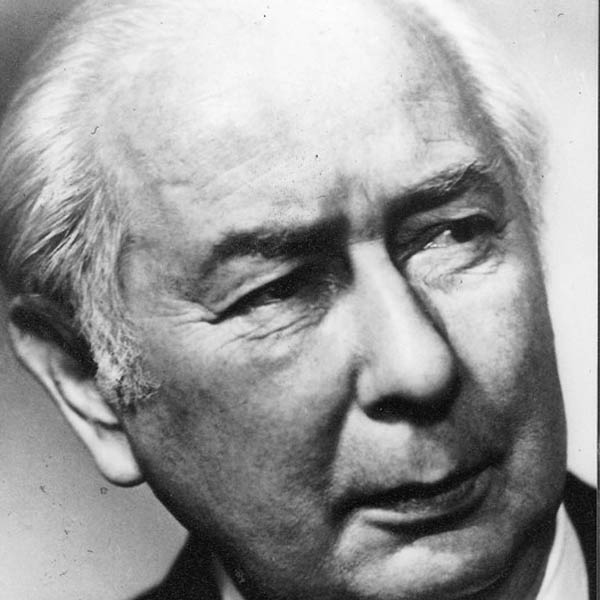
Interview mit dem Bundespräsidenten a. D. Dr. Richard von Weizsäcker fuer "Republica" (Brasilien)

Interview mit dem Bundespräsidenten a. D. Dr. Richard von Weizsäcker

„Und wenn die Welt voll Teufel wär, und wollte uns verschlingen, so fürchten wir uns nimmermehr, es soll uns doch gelingen“, hat Luther einmal behauptet. In der Zwischenzeit gehört die Welt ganz und gar dem Kapital, und wo wir auch hinschauen, sehen wir nur die abstrakten Gesetze des Marktes am Werk. Für den britischen Ökonom John Gray ist der gegenwärtige Kapitalismus fast zu einer amerikanischen "zivilen Weltreligion" geworden. Historiker wie der Amerikaner Luttwak wiederum nennen dieses Entwicklungsstadium der Kräfte des freien Marktes "Turbokapitalismus". Der "Faust II" zeigt uns einen Mega-Unternehmer, fast einen "Fusionierer", der an den Börsen der Welt die Vermischung von Realem und Irrealem betreibt, und zwar innerhalb eines Projekts, das ironischer Weise mit der Finanzreform eines kleinen Staates beginnt, bis es sich am Ende zu einer Form des Imperialismus moderner Subjektivität im Welttheater auswächst. Wenn nun der Kapitalismus eine zivile Religion ist, wem gebührt dann heute oder wem sollte heute das Privileg der Gnade gebühren? Denn alles deutet darauf hin, daß dieses Spiel aus logischer Sicht alle seine Teilnehmer ausschließt und daß es schon im voraus entschieden ist, wie bei der berühmten Wette mit dem Teufel.


Richard von Weizsäcker - Was Sie mir hier unterbreiten, ist keine Frage, sondern eine Deutung der Welt mit scharfen klaren Akzenten, die ich inte¬ressant finde, aber nicht alle teilen kann und auch in meiner Antwort nicht durchweg zu berücksichtigen in der Lage ist. Ich finde z. B. nicht, daß man sagen kann, die Welt gehöre ganz und gar dem Kapital, die Welt ist mehr, was wirtschaftlich unter die Gesetze des Kapitals fällt. Umso sicherer auch auf dem Weg, sich gegen eine Alleinherrschaft des Kapitals zur Wehr zu setzen. Der Versuch, aus einer Wirtschaftsform eine die Menschen erfüllende Religion zu machen, wird mit Sicherheit scheitern. Ich glaube auch nicht, daß es ganz zutrifft, den Begriff der zivilen Religion zu verwenden.


Mein Problem dem Amerikaner gegenüber ist nicht, daß sie alleine nur sich einem Turbokapitalismus verschrieben haben. Meine Schwierigkeit ist mehr die, daß sie zwar wertvolle, wichtige, notwendige Ziele für das friedliche Zusammenleben der Menschen verfolgten, nämlich Demokratie und Achtung der Menschenrechte, und Achtung der Minderheit, daß sie zugleich aber sich selber als die Weltmissionare in Bezug auf diese Ziele verstehen, mit der großen Macht, die sie haben, diese Missionaraufgabe verbinden und dabei zugleich natürlich auch eigene ganz praktische und konkrete und auch materielle Interessen verbinden, aber nicht, daß sie eine zivile Religion da entstellen, als vom Kapitalismus übernommen, verkündet und in der Welt missioniert hat, finde ich nicht so toll. Die Gnade ist überhaupt kein Privileg. Sie haben den „Luther“ angebracht. Und die zentrale Aussage von Luther ist, die Rechtfertigung allein aus Gnade, nämlich die Rechtfertigung des Menschen, der eben wie Luther ist, allein durch die Gnade Gottes. Die Gnade Gottes ist dadurch definiert, dass sie kein Privileg ist, sondern daß der Mensch darauf, ob er ihrer teilhaftig wird oder nicht, damit einverstanden ist.

Wir befinden uns in einem Übergangsstadium, bei dem die Unaufhaltsamkeit der ökologischen Auswirkungen ebenso wie die faktische Durchschlagenskraft der ökonomischen Prinzipien des Kapitals rings um die Welt grenzenlos rotieren und uns damit einer Globalisierung aussetzen, die noch immer ohne rechtlichen und moralischen Rahmen ist. Daß aber diese Entwicklung notwendig wird, eine Suche nach einem rechtlichen Rahmen und einer moralischen Basis einschließt, davon bin ich überzeugt, wir haben sie nur noch nicht erreicht, deswegen dürfen und können wir aber nicht mit einer Kapitulationserklärung beginnen und sagen, „Turbokapital ist die zivile Religion“ und die Mehrheit der Menschheit ist auf diese Weise ausgeschlossen und zum Untergang verurteilt. Das wird sich die Mehrheit der Menschheit nicht gefallen lassen.


Aber die Bewegungen dieser Fusionen materialisieren nur die zentrifugale Dynamik des spekulativen Kapitals und werden von der Politik, oder von dem was sie noch zu regulieren glaubt, kaum berührt. Wäre es vielleicht doch nicht sehr naiv, wie die gegenwärtigen Politiker des Dritten Weges zu glauben, es sei im Prinzip wenigstens möglich, die soziale Marktwirtschaft mit den unerbittlichen Spielregeln des neuen Wettbewerbs zu verbinden. Wie sehen Sie die Rhetorik des Dritten Weges, gerade auch mit Ihrem Erfahrungshintergrund als Unternehmer, bevor Sie 1969 in die Politik gingen?


Richard von Weizsäcker - Zu den Grundproblemen jeder parlamentarischen Parteiendemokratie gehört es, daß man auf der einen Seite um die Mehrheiten, also um die Macht kämpft, auf der anderen Seite aber der Lösung der Probleme dienen soll. Unter diesen zwei Zielen kommt oft, leider allzu oft, das zweite unter die Räder. Dann werden die Probleme instrumentalisiert, um das erste Ziel, das den Parteien wichtigste Ziel zu erreichen, nämlich die Macht. Wer den Dritten Weg postuliert, weil er von der Analyse ausgeht, daß die Mehrheit der Wähler in der Mitte anzutreffen ist, versorgt sie gar nicht mit einem Konzept und Inhalt und ist infolge dessen in Bezug auf die Lösung oberflächlich.


Auf der anderen Seite ist für Länder wie das meinige, natürlich eines nicht zu leugnen: Auf der einen Seite gehört es zu unseren Interessen, in einer weltweit grenzenlosen Gesellschaft wettbewerbsfähig zu sein. Auf der anderen Seite gehört es zu den zentralen Aufgaben einer Regierung, den sozialen Zusammenhalt in einer Gesellschaft zu erhalten oder herzustellen,

wenn er verloren geht. Diese zwei Ziele in Einklang miteinander zu bringen, ist die große und außerordentlich schwere Aufgabe in der Gegenwart. Es hat keinen Sinn um des sozialen Zusammenhalts willen den Wettbewerb zu vernachlässigen, denn zum sozialen Zusammenhalt gehört auch die materielle Leistungsfähigkeit und zu dieser materiellen Leistungsfähigkeit gelangt man nicht, wenn man sich am Wettbewerb nicht beteiligt. Aber es hat auf der anderen Seite natürlich auch keinen Sinn, den Wettbewerb zu heiligen, ihn zum alleinigen Maßstab aller politischen Entscheidungen zu machen und diejenigen, die im Wettbewerb nicht mithalten können, als die zwar zu Bedauernden, aber leider nicht zu berücksichtigenden sozialen Opfer dieses Systems zu stempeln. Das geht genauso wenig.


Das ist ein klassisches Spannungsverhältnis, wie es sich in der Politik immer wieder ergibt und wie man damit fertig wird - ich will jetzt hier keinen Entwurf eines Lehrbuchs für soziale Wirtschaftspolitik in einer kurzen Antwort entwerfen – aber das Wichtige ist, das in Bezug auf die Konzepte und nicht in Bezug auf die Mehrheitsnähe über die Inhalt des „Dritten Weges“ diskutiert wird, und da gibt es eben gute und schlechte Beispiele dafür.


In diesem Zusammenhang haben Sie gelegentlich über die Aporien eines sogenannten Ungleichgewichts zwischen den Polen der „Machtversessenheit“ und „Machtvegessenheit“ des Parteisystems angesprochen. Parteien kämpfen um Macht und Mehrheit. Tun sie nicht dies, dann seien sie überhaupt nicht Parteien. Erreichen sie die Macht, dann vergessen sie wozu sie die Macht errungen haben oder legitimieren sie nicht diese Macht in notwendigen Entscheidungen des Mandaten der Wähler. Die Stabilität des Milieus der Parteien in Deutschland scheint längst Vergangenheit zu sein. Ihre sozialen Ressourcen sind versiegt, ihre Grundlagen und gesellschaftlicher Halt verloren. Wohin steuert eigentlich dieses System?

 Richard von Weizsäcker - Also ich glaube nicht, dass die Lage in Deutschland so grundlegend anders ist, als in anderen mir bekannten ebenfalls europäischen Demokratien, dass man dieses von mir gerügte Problem der Machtversessenheit und Machtvergessenheit nur auf die Deutschen beziehen kann. Ich will noch einmal sagen, richtig ist, die Parteien sind machtversessen. Sie wollen die Mehrheit und das ist ihnen in dem Moment, wo sie gegeneinander um die Mehrheit kämpfen, wichtiger als alles.


Und wenn dann eine Partei, ein Parteilager, die Macht errungen hat in einer Wahl, dann sind sie immer wieder in der Gefahr, die Aufgabe nicht genügend mutig wahrzunehmen, welche darin besteht, voranzugehen und nicht hinterherzulaufen. Sie brauchen ja nur – ich weiß nicht, wie weit sie die deutsche Innenpolitik zur Zeit verfolgen – zur Zeit können Sie, seit ein paar ein paar Wochen oder Monaten, jeden Tag, immerfort überall darüber lesen, ob wir nun eine Rentenreform oder eine Steuerreform rechnen können. Beide Fragen sind sehr wichtig. Vor allem die Rentenreform ist von ganz außerordentlicher Wichtigkeit dafür, dass junge Leute, wie unser Freund hier auch in der Lage ist, das nötige zu bezahlen, dass seine Großeltern und Eltern ihre Rente bekommen, ohne dass er selber rentenlose oder zu schwach berentet dasteht, wenn er mal in den Ruhestand tritt in einigen Jahren.


Das ist eine außerordentlich wichtige Frage. Gedacht wird aber nach wie vor vielmehr an die Wirkung bei der nächsten Landtagswahl, aber nicht an die Wirkung in 30 oder 50 Jahren, wenn es für ihn so weit ist. Das ist das, was ich unter Machtvergessenheit verstehe. Zur Ausübung der Macht gehört der Mut zu langfristigen Konzeptlösungen und

Reformen. Darf ich mal sagen, einer der Hauptkritikpunkte ist, dass die Rentenpolitiker Blüm und Dressler, die vorher 10 oder 20 Jahre oder viel Jahre die Verantwortung für diese Sache in diesen beiden großen Parteien hatten, unaufhörlich sich und der Bevölkerung blauen Dunst vorgemacht und behauptet haben, die Rentenversicherung sei finanzierbar und Wissenstand. Und der Herr Riester ist der erste, der in einer verantwortlichen amtlichen Stellung dazu auffordert, sich dieser Analyse bewußt zu werden und daraus die notwendigen Konsequenzen zu ziehen. Und jetzt stößt er wieder auf Schwierigkeiten in dem Dressler-Klüngel in seiner Partei und in dem Blüm-Flügel bei der Opposition, und nun wird sich zeigen, was rauskommt.


Heute können Sie mal ausnahmsweise die Bild-Zeitung lesen. Da steht ein kleiner Leitartikel zu dieser Frage, und ich will hier wirklich nicht die Bild-Zeitung propagieren, aber das ist das, was ich unter Machtvergessenheit verstehe und nur selbstverständlich ist die britische und die französische und die italienische demokratische Klasse von diesen Gefahren nicht frei. Und infolgedessen muss es halt immer wieder moniert, kritisiert und beim Namen genannt werden, so dass man noch ganz gut über die nächsten Runden kommt und schließlich wird man sich immer wieder daran erinnern, dass alle anderen Systeme noch schlechter sind, als wir.


Am 3. Oktober 1990 haben Sie die Deutsche Einheit in der Europäischen Union verkündet. Zehn Jahre später sehen wir, daß die Betonung des nationalen Interesses immer noch dominiert und Brüssel als eine sehr entfernte Instanz im Selbstbewußtsein des Durchschnittsbürgers erscheint. Mit dem Kanzler Schröder haben sich die nationalen Interessen nur immer offensichtlicher in der Union manifestiert, und die fatale Präsenz dieses deutschen Übergewichts hat bei vielen Nachbarn eine chauvinistische Rhetorik als Reaktion hervorgerufen. Wie sehen sie die Europäische Union zehn Jahre nach Maastricht hinsichtlich dieser Balance noch divergierender nationaler Interessen so kurz vor dem Euro?


Richard von Weizsäcker - Europa befindet sich zum ersten Mal in seiner gesamten Geschichte vor der Chance, sich zu vereinigen. Was das heißt, ist gedanklich schwer zu formulieren und wenn überhaupt, dann nur im Lauf mehrerer Generationen zu verwirklichen. Es gibt weder in der europäischen noch in irgendeiner anderen Geschichte eines anderen Kontinents ein Muster dafür, wie sich Nationen bis hin in eine gemeinsame Verfassung hinein vereinigen können und zugleich dafür das Verständnis und die Zustimmung ihrer eigenen Bürger zu gewinnen. Wir befinden uns mitten in diesem Prozeß.


Zur Zeit schreiten wir, gerade übrigens in den letzten zwei, drei Monaten, wie ich finde, auf einem interessanten Weg in die Zukunft. Nämlich, auf der einen Seite ist ein Verzicht auf die Nation weder politisch durchsetzbar noch historisch klug. Es gibt keine europäische Sprache, es gibt kein europäisches Volk, es gibt zwar gemeinsame europäische kulturelle Würze, auch gibt es gemeinsame europäische Interessen, aber das was eine Nation ausmacht, nämlich das Bewußtsein einer gemeinsamen Vergangenheit und den Willen zu einer gemeinsamen Zukunft. Das können Sie europäisch nicht formulieren. Deswegen wird eine neue Aufteilung der Befugnisse angesteuert. Befugnisse in mindestens drei verschiedenen Etagen, in der europäischen, der nationalen und der regionalen, und wenn Sie wollen, auch noch in der kommunalen.


Wenn man zu keiner vernünftigem Einverständnis in Bezug auf die Aufteilung kommt, dann werden weder die Engländer, noch die Franzosen, noch die Portugiesen, noch die Dänen, noch die Deutschen noch irgendein anderes europäisches Land mit marschieren. Man muß die Menschen doch davon überzeugen können, dass es
im Interesse von ihnen und

ihren Kindern und Enkeln ist, was wir hier machen. Die Vorstellung, dass mit dem Kanzler Schröder die nationalen Interessen immer offensichtlicher werden, das halte ich einfach für falsch. Schröder hat den Mund weniger voll genommen, als sein Vorgänger. Er ist in Bezug auf schwierige Fortschritte zum europäischen Zusammenwachsen nüchterner, ich würde sagen auch realistischer, in seinen Ausdrücken geworden, z. B. auch in Bezug auf die Frage „Wann Polen Mitglied der europäischen Union werden wird“. Die Polen haben inzwischen längst verstanden, dass Schröder keineswegs gegen ihren Beitritt ist, sie haben aber auch verstanden, dass er ihnen weder Bedingungen noch Zeitpunkte zusagen will, von denen er weiß, dass er sie nicht einhalten kann.


Die Aufgabe der historisch und politisch ganz außerordentlich schwierigen Aufteilung zwischen nationalen und europäischen Befugnissen, das Kernthema der Initiativen, die der deutsche Außenminister jetzt vor 6 oder 8 Wochen, wir befinden uns zusammen mit den Franzosen, aber nicht nur mit ihnen, auf dem Weg eines nicht riesengroßen, aber wichtigen Fortschritt in Richtung auf die europäische Vereinigung. Was in Ihrer Frage hier enthalten ist, war die vielleicht verständliche, aber nicht wirklich durchdachte und erprobte Reaktion auf die ersten Monate einer neuen Regierung. Und was Sie hier über die fatale Präsenz eines deutschen Übergewichts sagen, dass wir 80 Millionen Menschen in unserer Nation umfassen, können wir weder einen bösen politischen Willen noch das Fatum in Anspruch nehmen, sondern das ist eine Realität, die uns auf der einen Seite Veranlassung gibt, den europäischen Motor am Laufen zu halten und auf der anderen Seite mit der nötigen Rücksichtnahme auf kleinere Länder aufzutreten. Das gelingt uns manchmal schlecht und manchmal gut, aber von einer fatalen Präsenz eines deutschen Übergewichts zu sprechen, halte ich einfach für nicht gerecht.

Hölderlin hat einst die Vorrede des Hyperion "der Liebe der Deutschen" gewidmet. Was bedeutet es heute Deutscher zu sein, und wer darf sich rechtmäßig Deutscher nennen?  

Richard von Weizsäcker - Hölderlin gehört einer Zeit an, in der es keine politische deutsche Nation war, in der aber insbesondere die Literatur und auch andere Zweige der Kultur in Deutschland das Bedürfnis hatten, eine deutsche Kulturnation zum Ausdruck zu bringen. Es begann übrigens mit Lessing, der ein deutsches Nationaltheater gründen wollte, um sich gegen die Übermacht oder Alleinherrschaft der französischen Sprache an den königlichen Hoftheatern in Deutschland zur Wehr zu setzen.

Man wollte an den deutschen Nationaltheatern die deutsche Sprache berücksichtigt haben, und Hölderlin, Jean Paul und wenn Sie so wollen, Schiller und Goethe haben eben das geschaffen, was wir die deutsche Kulturnation nennen, lange bevor es eine politische deutsche Nation gab. In diesem Sinn konnten die Dichter und konnte auch Hölderlin von einer Liebe der Deutschen zu ihrer Kultur, zu ihrer geistigen Wurzel sprechen. Das war ja gar keine Äußerung, so wie man heute und so wie auch Sie in Ihrer Frage diese Begriffe benutzen.

Damals gab es ja keinen Nationalstaat. Das ist ja gerade der Witz der Sache. Während wir heute in einem Nationalstaat leben, der nun gerade im Falle der Deutschen, ganz im Gegensatz zu fast allen unseren Partnern in Europa ein Föderalstaat ist, die föderalen Glieder so weit gehen, zu sagen, es gäbe überhaupt keine nationale

Kultur, was ich nun wiederum meinerseits für ausgemachten Blödsinn halte, denn Immanuel Kant ist ja nicht ein ostpreußischer Denker und Richard Wagner ist kein herumfahrender Sachse und Richard Strauß darf man auch außerhalb von München spielen und Thomas Mann und Bert Brecht und alle diese Leute gehören zur Überlieferung der deutschen Kultur. Auch obwohl die von mir jetzt genannten Beispiele, also nicht gerade Kant, aber die anderen, alle aus einer Zeit stammen, in der es auch schon einen politischen deutschen Nationalstaat gegeben hat. Ich finde gar nicht, dass wir genötigt sind, uns von der Vorstellung einer deutschen Kultur zu verabschieden. Nur hat man zu einem Zeitpunkt, als eine politische Nation geschaffen wurde, gelegentlich die überlieferte Kultur mißbraucht, in dem man dann plötzlich angefangen hat von dem Volk der Dichter und Denker zu sprechen, die ihrerseits die Welt beglücken soll, was natürlich Unsinn ist.


Das ist eine Säge an die eigentlichen geistigen und moralischen Wurzeln dieser Kultur, wenn sie in dieser Weise mißbraucht wird. Aber insoweit ist der Bezug auf Hölderlin im Zusammenhang mit einer Frage, wer oder was eigentlich heute die Deutschen lieben darf und sich dazu zählen darf, ganz außerordentlich mißverständlich, wenn wir heute davon sprechen, was sich Deutscher nennen darf, dann sind wir mitten in der Materie eines Einwanderungsgesetzes oder einer Reform unserer Staatsbürgerschaftsregeln usw. Wir leben heute in einer Zeit, in der die Grenzen offen sind, in der Migrationen im Gang sind, die es früher nicht gegeben hat. Unser Staatsbürgerschaftsrecht stammt aus einer Zeit des Nationalismus, wo man also die eigene Nation verstand, sie stammt aus dem Jahr 1913. Das stammt aus einer Zeit, wo die eigene Nation sich verstanden hat als eine Bastion gegen die andere.
Also wurde das Staatsbürgerschaft so restriktiv wie möglich gefaßt. Das ist ein unsinniges Modell für das, was die Gegenwart uns nahe legt und was wir in der Gegenwart lernen müssen. Heute müssen wir lernen, miteinander zu leben gerade im Lichte der Tatsache, dass wir unterschiedliche Religionen und Auffassungen und Traditionen und Kulturen und Hautfarben und Rässe haben und auf diesem Gebiet stellt sich die Frage, wer sich als Deutscher fühlen oder nennen darf, so vollständig anders, wie zur Zeit von Hölderlin.

Die Vorschläge der Komission, die auf Antrag des Verteidigungsministers Rudolf Scharping gebildet wurde und deren Vorsitzender Sie ein Jahr lang waren, laufen praktisch auf das Ende der allgemeinen Wehrpflicht hinaus, mit der drastischen Reduzierung der Bundeswehr auf 30.000 Soldaten, im Rahmen des Modells der amerikanischen Armee. Durch diese Modernisierung wird sich schließlich Deutschland und die Europäische Union von der amerikanischen Obhut auf dem Kontinent emanzipieren können, denn sie wird ein schnelleres militärisches Handeln im Interesse der Union ermöglichen. Wie haben Sie diese Debatte begeleitet, die mit einem Tabu bricht, das seit der Wiedereinführung der Wehrpflicht unter Adenauer besteht, und welches sind die Perspektiven dieser neuen deutschen Bundeswehr in der Europäischen Union?
 
Richard von Weizsäcker - Also: Erstens sind Tabus von Übel, wenn sie zu einem Denkverbot ausarten? Haben wir sie wirklich nicht abzuschaffen, vorgeschlagen, sondern gesagt, sie soll aufrecht erhalten bleiben, aber nur in dem flexiblen Umfang angewandt werden, der es gegenüber einem jungen Mann rechtfertigt, zu sagen, dass er wird gebraucht wird aus sicherheitpolitischen Gründen. Unsere sicherheitspolitische Lage hat sich seit dem Ende des kalten Krieges natürlich einigermaßen fundamental verändert. Wir sind von lauter Bündnispartnern, von sicherheitspolitischen Freunden umgeben, wir haben Streitkräfte, in denen es zu viel Personal gibt, das in diesem Umfang nicht gebraucht wird, dafür aber lauter Material, was dringend der Modernisierung bedarf. Die etwas polemische Form, dies auszudrücken, heißt, dass unsere Soldaten gelegentlich jünger sind als die Waffen.
Das also was gemacht werden muss, ist eine Modernisierung und infolgedessen eine Umverlagerung der prozentualen Kosten. Das, worauf wir achten müssen, ist, den Ausbruch von Konflikten auf unserem Kontinent nach Möglichkeit zu verhindern, oder, wenn es doch zum Konfliktausbruch gekommen ist, ihn zu beenden. Im Zeichen der modernen Bewaffnung sprechen wir also von „rapid task forces“, für die die deutschen Streitkräfte zur Zeit nicht eingeteilt sind. Im Prinzip besteht darüber auch gar keine Meinungsverschiedenheit. Jetzt haben Sie die Auswirkungen auf das Atlantische Bündnisverhältnis angesprochen. Da gibt es in der Tat Meinungsverschiedenheiten. Das liegt übrigens nicht zuletzt daran, dass die Amerikaner selber nicht so ganz genau wissen, was sie eigentlich wollen. Auf der einen Seite haben sie uns seit 1960, seit John F. Kennedy, immer gelehrt, wir sollten endlich eine eigene europäische Säule errichten, auf der anderen Seite haben sie uns dann immer vorgeworfen, wir würden in Richtung auf eine solche europäische Säule nur Worte sprechen aber keine Taten folgen lassen und wenn wir dann anfangen, Taten folgen zu lassen, dann ist nicht ganz klar, ob die Amerikaner nicht plötzlich das Gefühl haben, sie würden auf diese Weise die Dominanz über Europa auf diese Weise einbüßen.
Meine eigene Meinung ist ganz eindeutig. Das atlantische Bündnis werden wir auch in der Zukunft brauchen. Es wird dann und nur dann eine gesunde Zukunft haben, wenn die Europäer eine eigene und sicherheitspolitische Substanz und Identität schaffen. Sonst werden wir immer wieder in die Schwierigkeiten hineingeraten, die wir zuletzt im Kosovo erlebt haben, nämlich dass die Amerikaner, die im Grunde genommen gar nicht wollen, dass sie nun immerfort für Stabilität und Frieden auf dem europäischen Kontinent sorgen sollen, dann ihrerseits in ihrer Form die Alleinführung übernehmen, die die Europäer zu entlasten scheint, von der Aufgabe selber für Stabilität und Frieden auf ihrem Kontinent zu sorgen.
Also hier ist ein Spannungsverhältnis vorhanden und das muss auch durchgestanden werden, aber ich sage noch einmal, das Atlantische Bündnis soll und wird erhalten bleiben, nur dazu ist es notwendig, dass die Europäer hier z. B. eine eigene sicherheitspolitische Substanz den Worten Taten folgen lassen. Deswegen haben wir im Bericht meiner Kommission von europäischen Imperativen gesprochen.

Im Zentrum Ihres politischen Lebens steht die sogenannte Rede. Die besondere Eindringlichkeit dieser Rede ergibt sich aus der widersprüchlichen Mischung von zwei Genres. Sie ist weltliche Beichte und Predigt zugleich. Beichte ist sie, weil hier einer, wenn auch im Namen des Kollektivs, Schuld in einer Weise einbekennt, als würden Sie (oder besser das repräsentierte Kollektiv) überhaupt zum ersten Mal in dieser Rückhaltlosigkeit davon sprechen. Und sie ist zugleich auch Predigt, weil hier einer Ihr dem politischen Tagesstreit enthobenes Amt, die Feierlichkeit des Anlasses und die Besonderheit des Ortes konsequent dazu nutzt, um der Gemeinde Wahrheiten zu sagen. Nur sind es - und da hat die Analogie dann ihre Grenzen - keine alten Wahrheiten, die nur noch rituell beschworen werden.
Die Wahrheiten aber, die Sie verkündigt haben, haben selbst eine häretische Qualität. Alles, was Sie mit der Definitionsgewalt Ihres Amtes apodiktisch feststellt, war sowohl im Bewußtsein der Bevölkerung als auch in dem vieler der anwesenden Parlamentarier umstritten. Die the-senhaften Eckpunkte Ihrer Rede richten sich frontal in der Tat gegen jene Deutungsmuster, mit denen Sich die konservativen Eliten der Republik seit vierzig Jahren ihre Schuldgefühle vom Leibe zu halten versuchten. So sagten Sie gegen jene, die die deutschen Menschheitsverbrechen in existentialistischer Metaphorik als anonymes „Verhängnis“ oder als „europäischen“ Bürgerkrieg erklären wol¬len: „Aber wir dürfen nicht im Ende des Krieges die Ursache für Flucht, Vertreibung und Unfreiheit sehen. Sie liegt vielmehr in seinem Anfang und im Beginn jener Gewaltherrschaft, die zum Kriege führte“. Könnten Sie vielleicht diesen Kontext der Rede für uns noch einmal zusammenfassen.


Richard von Weizsäcker - Es ist eine Analyse einer Ansprache, die ich am 8. Mai 1985 gehalten habe, wie ich sie in dieser Form noch nie gehört habe. Also, Schuld ist die Unschuld persönlich und nicht kollektiv, das habe ich in der Ansprache auch gesagt. Ein Bewußtsein von dem Gang der Geschichte und von der Schuld, die sich in dieser Geschichte gezeigt hat, halte ich nicht nur aus historisch-moralischen Gründen für notwendig, sondern es ist auch ein Gebot gegenwärtiger politischer Verantwortung. Warum haben sich denn auf der einen Seite alle unsere neuen Nachbarn gemeinsam mit uns gefreut, als die Berliner Mauer geöffnet wird, um anschließend voller Sorgen darauf zu reagieren, dass Deutschland sich staatlich wieder vereinigen würde. Warum haben sie das getan? Weil sie ein geschichtliches Erinnerungsvermögen haben, was früher da schon alles passiert ist. Es ist ein Gebot politischer Klugheit und Verantwortung, sich dessen als deutscher Politiker auch bewußt zu sein.


Also, diese Erinnerung an die Geschichte mit ihrer Schuld ist auch bei denjenigen Generationen notwendig, die selbstverständlich vollkommen frei von Schuld an dieser Vergangenheit sind, die aber der Verantwortung für die Folgen dieser damaligen Kapitel nicht entgehen können. Darüber habe ich gesprochen. Es widerspricht meiner Vorstellung dessen, dass ein gewählter Politiker, Parlamentarier oder Inhaber eines Verfassungsorganes, wie ich es damals war, als Prediger auftritt, das widerspricht meinem politischen Verständnis, in Wirklichkeit aber auch meinem religiösen Verständnis. Sie verwenden den Begriff des Predigers in einer sekularisierten Form, die mir nicht liegt .....

Wenn Sie davon sprechen, daß die Wahrheit, die ich verkündet habe, eine häretische Qualität hat, dann stempeln Sie damit die ganze Gesellschaft zu einer quasi Kirche, die ihrerseits blind für die Wahrheit ist. Sehen Sie mal, ich habe natürlich, ich bin mir ja dessen bewußt gewesen, dass diese Rede für viele schwer zu akzeptieren war. Aber erstens Mal muß ich doch in aller Fairness für meine Vorgänge sagen, ich bin doch nicht der erste, der darüber gesprochen hat.

Es war nur ein historisch wichtiger Moment, es war ein wichtiger Zeitpunkt, zu dem Gorbatschow gerade in der Sowjetunion gerade an die Macht gekommen war und zu dem es sich immer deutlicher abzeichnete, dass nun die Deutschen nicht weiterhin nur als zwei Teilstaaten sozusagen Mitläufer in ihrem Bündnis in unselbständigem Bezug auf ihre geschichtliche Vergangenheit und politische Zukunft sein würden, sondern wo sie nun wirklich selber bekennen, selber handeln mußten und folgedessen auch zum Bekenntnis ihrer Herkunft klare Worte beherzigen sollten. Dass das Ende des zweiten Weltkrieges ein schrecklicher Verlust und nicht nur das Ende, sondern auch der Beginn schweren menschlichen Leids gewesen ist, ändert nichts daran, dass es die Befreiung von der Diktatur war, die uns in Unrecht, Verbrechen und Unglück geführt hat.
Und diese Befreiung ist es, die uns alle betrifft unabhängig davon, welches persönliche Schicksal jeder nach dem Ende des Kriege hatte. Um das deutlich beim Namen zu nennen, habe ich getan, das anzuhören ist schwergefallen.

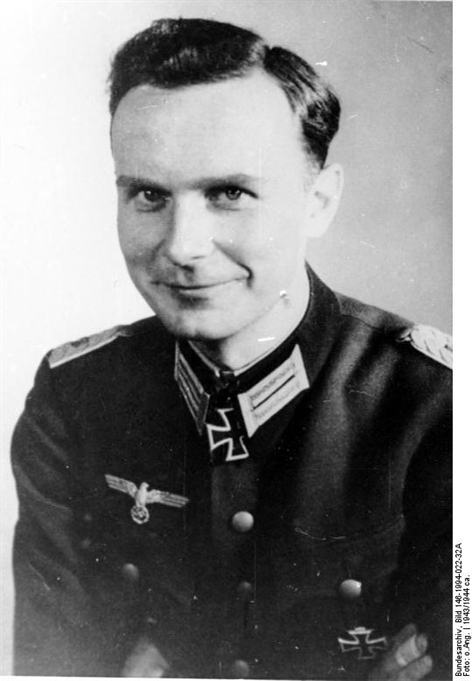
Ihr Freund Axel von Busche hatte sich Stauffenberg für ein Selbstmord-Attentat auf den Führer zur Verfügung gestellt. Sie selbst haben Ihren Eid als Soldat gebrochen, als Sie in Solidarität mit Ihrer Kompanie auf das Portrait des Führers schossen. Wie läßt sich diese Tragödie des Befehlsgehorsams der Generalität erklären und wie läßt sie sich verbinden mit dem spontanen zivilen Widerstand vieler einfacher Bürger und dem Beispiel der Weißen Rose?


Richard von Weizsäcker - Ich war vier Wochen vor dem 20. Juli 1944 zu Besuch bei meinem eigenen älteren Bruder und einem Freund. Ich hatte nun gehört, dass das Attentat des 20. Juli bald stattfinden müsse, nicht das genaue Datum. Sie haben gesagt, das ginge nicht, denn dann würde wieder, das würde nur zu einer neuen, wie man das im 1. Krieg sagte, „Dolchstoßlegende“ führen. Und dann habe ich immer gesagt, das ist mir egal mit dem Dolchstoß, wenn man sieht, wie viel Leben jeden Tag verloren geht und man hat die Möglichkeit, dieses tägliche Morden zu beenden, dann ist es doch nicht so furchtbar wichtig, ob man vor der eigenen Bevölkerung als ein Held oder als ein Verräter dasteht. Ist doch viel wichtiger, das zu beenden. Und wenn man sich klar macht, dass zwischen dem 20. Juli 1944 und dem Ende des Krieges mehr Menschen das Leben verloren haben als in der ganzen Zeit bis dahin, und das haben wir eben nicht geschafft und das ist unser Verschulden.

Ihr Amt hatte die Aura einer gewissen Machtlosigkeit. Was kann ein Intellektueller an der Macht faktisch bewirken. Wie sehen sie diese Allianz? In den Stück "Gundling" von Heiner Müller, das Sie schätzen, bezieht sich Friedrich auf Voltaire, indem den Vergleich mit einer Orange anführt, die in der Hand des Monarchen zerquetscht werden könnte.

 Richard von Weizsäcker - Die Art und Weise, wie Friedrich II. den „Gundling“ behandelt hat, ist menschlich unerträglich. Die Rolle, die Gundling spielt, ist beklagenswert. Sie können für mein Gefühl, wenn das Heiner Müller gemeint hat, nur deutlich widersprechen. Sie können wirklich nicht die Rolle der Intellektuellen in unserer Demokratie mit der Rolle Gundlings unter der absolutistischen Herrschaft vergleichen. Wenn es so wäre, dann wären die Intellektuellen selber dran schuld. Deswegen ist, dass die Intellektuellen sich bei uns immerfort viel zu sehr aus den Auseinandersetzungen heraus halten. Die Intellektuellen haben bei uns in Deutschland eine viel zu geringe Rolle. Sie haben in Frankreich eine größere Rolle und sie haben in mehr als einem lateinamerikanischen Land eine größere Rolle als bei uns. Das habe ich oft beklagt und das liegt nicht an den politischen Herrschern, sondern das liegt auch an den Intellektuellen selber.


Es hängt doch davon ab, welche großen Aufgaben eine geschichtliche Zeitepoche stellt. Zu den schwierigsten Aufgaben unserer Zeit gehört trotz aller Bedeutung, die ich also dem Mut zur Rentenreform usw. zumesse, die allgemeine Orientierung für den Menschen. Als ich jung war, waren die Probleme, die zu lösen waren, sehr einfach zu erkennen. Wir haben sie zum großen Teil nicht gelöst, das ist uns vorzuwerfen. Aber in der Frage Freiheit oder Unfreiheit, in der Frage Diktatur oder Demokratie oder in der Frage Überlebenkönnen in einem Zustand der Not ist es relativ einfach, klar zu erkennen, was der eigentliche Sinn der eigenen Existenz heute und morgen und übermorgen ist.

In einer Zeit, in der aber ich rede ja jetzt von unserem Land und nicht von Ihrem, in dem nicht auf den Höfen unserer Häuser, wie noch in meiner Jugend, um Brot gebettelt und gesungen wurde und wo zugleich eine technische und wissenschaftliche Revolution im Gange ist, die eben die eigene ethische und auch seelische und auch sinnverfüllende Wegweisung so schwer macht, in einer solchen Zeit ist es viel wichtiger zu wissen, welche Fragen hier gestellt werden müssen oder auch Angebote für die Antwort auf Fragen zu geben als die Machtkompetenz über die Mehrheit in einer gesetzgeberischen Körperschaft. Das Problem für den Bundespräsidenten bei uns ist nicht, dass er nicht zu wenig formale Befugnisse hat, sondern das Problem tritt dann auf, wenn er nicht weiß, was für Fragen zu stellen sind oder wenn er keine Antwort weiß.

Berlin, das die Hauptstadt der künstlerischen Avantgarde in den 20er und 30er Jahren gewesen war, erobert seine Rolle als dynamischer Brennpunkt im Zentrum Europas. Sie waren schon Bürgermeister dieser Stadt und hatten immer eine sehr enge Beziehung zu Künstlern der Avantgarde. In den 70er und 80er Jahren war die Bundesrepublik der größte staatliche Mäzen in Europa. Ich möchte hier, ohne andere dabei zurücksetzen zu wollen, nur zwei Namen nennen, Joseph Beuys und Heiner Müller, der eine aus der ehemaligen Bundesrepublik, der andere aus der ehemaligen DDR. Müller war ein Künstler des zerrissenen deutschen Bewusstseins und Beuys versuchte mehr als jeder andere die Ästhetik auch auf die Politik auszudehnen, indem er verkündete, wir alle seien Künstler Heute hat sich das Bild gewandelt. Wie läßt sich die Tradition staatlicher Kunstförderung mit diesem neuen Markt für Kultur verbinden?

Richard von Weizsäcker - Ich habe gerade eine Rede zur Eröffnung der Opernfestspiele in München gemacht unter dem Stichwort „Kultur zwischen Politik und Markt“, ich will sie nicht mit meinen Texten belasten, aber ich kann sie ihnen nur empfehlen. Es ist richtig, dass Deutschland auf dem Gebiet der Kultur eine einigermaßen herausragend Stellung in Europa

hatte und im Grunde immer noch hat, vielmehr als andere Länder. Ich halte das nicht nur für eine gute Überlieferung aus der Vergangenheit sondern auch für einen notwendigen Bestandteil zur Identifizierung der Menschen in ihrer eigenen Heimat. Wenn eine Bühne in einer kleinen oder mittleren Stadt geschlossen wird, weil nicht genug Geld dafür da ist, dann betrifft das die Verwurzelung der Menschen, die dort leben. Als der Krieg zu Ende war und niemand Geld hatte, war fast das erste, was in Deutschland wieder angefangen hat, Theaterspielen, teilweise geradezu auf den Trümmern der Ruinen. Also hier in Berlin haben sie wirklich auf den Trümmern angefangen, zu spielen und heute sprechen wir immer von Schließung von Theatern. Gut, natürlich müssen auch die Theater und Bühnen und Künste, die Subventionen bekommen, nicht beleidigt reagieren, wenn man von ihnen Rechenschaft verlangt, wie sie mit den öffentlichen Mitteln umgehen. Aber ich wehre mich immer schon von vornherein gegen den Begriff der Subvention. Ich habe jetzt gerade in München gesagt, kaum wird das Wort Oper oder Bühne genannt, ist von Subventionen die Rede. Das ist eine öffentliche Verpflichtung für unser Leben. Schulen haben wir ja auch, da reden wir ja auch nicht von Subventionen. Straßen bauen wir auch, da redet niemand von Subventionen, wir halten uns sogar einen Bürgermeister, da reden wir auch nicht von Subventionen. Wir brauchen die alle, aber die Bühnen brauchen wir auch, und warum sollen wir von Subventionen reden, die den Eindruck suggerieren, als solle hier etwas künstlich am Leben erhalten werden, was in Wirklichkeit nicht lebensfähig ist. Selbstverständlich ist nicht jedes Bühnenstück nicht lebensnotwendig, nicht jede Hervorbringung eines zeitgenössischen Künstlers ein notwendiger Bestandteil für unser Herz und unseren Atem. Aber insgesamt halte ich es für notwendig. Es gibt eine gute Überlieferung von Geist und Kultur in der Geschichte der Deutschen. An diese guten Tage der Überlieferung anzuknüpfen und in diesem Sinne die Kultur zu fördern und die Kultusminister und Dezernenten nicht nur danach auszurichten, ob sie am besten in der Lage sind Sparmaßnahmen beim Finanzminister durchzusetzen in ihrem Bereich, das gehört zu unserem Lebensgefühl und das gehört, wie ich finde, zum Selbstvertrauen wie auch zum Vertrauen unserer Nation. Vielen Dank für das Interview, Herr Dr. von Weizsäcker.

Berlin, den 4 Juli 2000